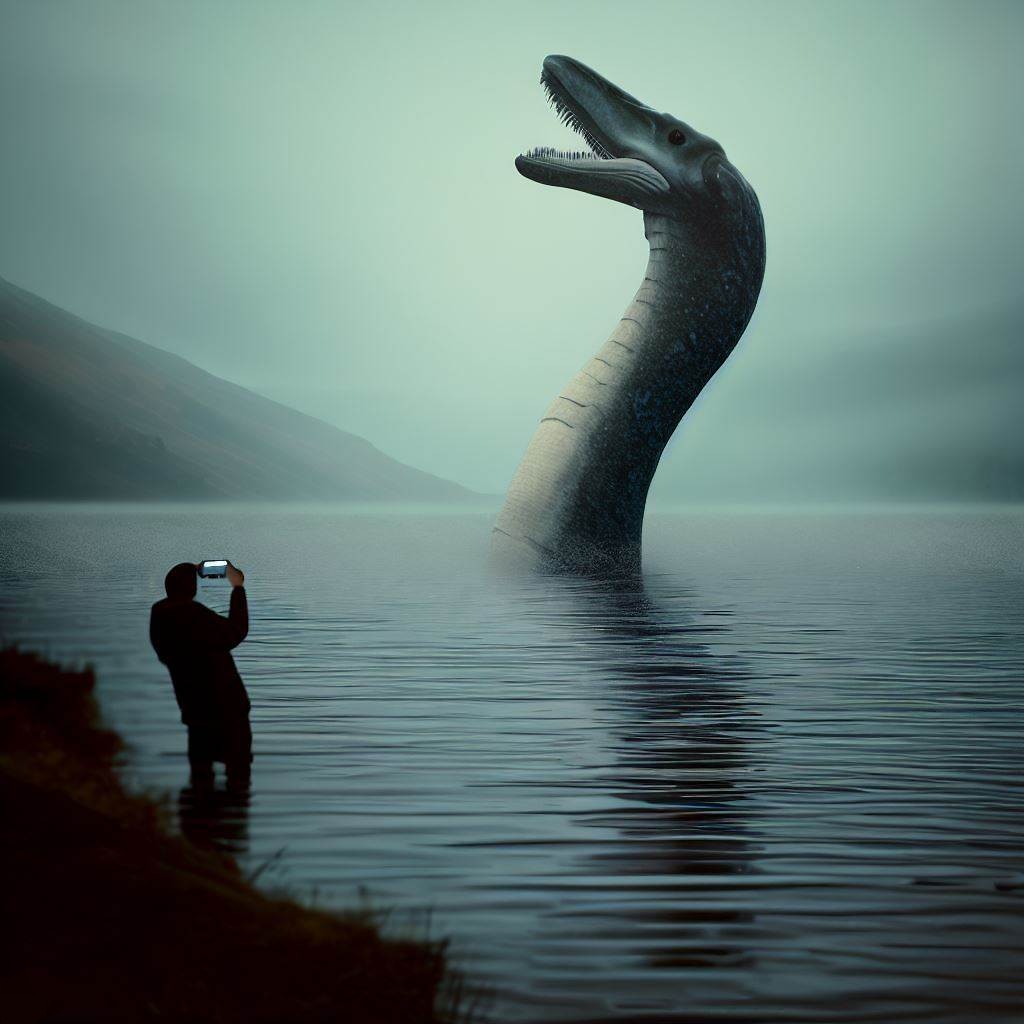
The Enigmatic Loch Ness Monster: Exploring Sightings, Theories, and Debunking
The story of the Loch Ness Monster, or “Nessie” as it’s affectionately known, has captivated the imagination of people around the world for decades. The elusive creature, said to inhabit the depths of Scotland’s famous Loch Ness, has been the subject of countless sightings, photographs, and even scientific expeditions. But what is the truth behind this enduring legend? In this post, we’ll take a closer look at the history of Nessie, examine some of the most popular theories about its existence, and explore whether this elusive creature is truly a monster or simply a myth.
The first recorded sighting of Nessie was in the 6th century by the Irish monk St. Columba. According to legend, he saw a man being attacked by the creature and intervened, commanding it to “go back with all speed.” The creature reportedly obeyed and disappeared into the water. Over the centuries, there have been countless sightings of Nessie, with some of the most famous occurring in the 1930s and 40s.
One popular theory is that Nessie is a plesiosaur, a type of aquatic reptile that lived during the Jurassic period. The theory suggests that a small population of plesiosaurs survived extinction and adapted to life in the Loch. However, this theory has been largely debunked by the scientific community, as there is no evidence to support the existence of such a population.
Another theory is that Nessie is a large eel, as eels are known to live in the Loch. However, the size and shape of reported sightings do not match that of a typical eel.
It is also debated whether Nessie is extinct and whether it would require a breeding population and sufficient food sources to survive. Some scientists argue that a breeding population of large animals could not survive in the Loch, as the ecosystem is not capable of supporting them. Others argue that Nessie could survive by feeding on smaller fish and other prey.
Despite the numerous sightings and theories, there is no concrete evidence to prove the existence of Nessie. Many sightings can be explained as misidentifications of known creatures or natural phenomena. As technology improves, it becomes increasingly difficult for the creature to remain hidden from modern detection methods.
In the end, the mystery of the Loch Ness Monster remains unsolved. Nessie continues to captivate the imaginations of people around the world, and will likely remain a fixture of Scottish folklore for generations to come.
Categories: blog, cryptids, paranormal, unexplained
 Expedition Truth